
Stoichiometry Practice Worksheet
Stoichiometry Practice Worksheet - What is stoichiometry & stoichiometric coefficient. Next, convert the units of measurement. The stoichiometry of a reaction describes the relative amounts of reactants and. The rules followed in the determination of stoichiometric. Stoichiometry helps measure and calculate important quantities, such as: Stoichiometry measures these quantitative relationships, and is used to determine the amount of products and reactants that are produced or needed in a given reaction.
Next, convert the units of measurement. To do stoichiometry, start by balancing the chemical equation so that the number of atoms on each side of the equal sign are exactly the same. The rules followed in the determination of stoichiometric. Master stoichiometry basics and solve chemical equations effectively. Stoichiometry measures these quantitative relationships, and is used to determine the amount of products and reactants that are produced or needed in a given reaction.
Stoichiometry Worksheet 2 Key PDF

Also, learn how to convert from moles to grams & vice versa. Explore what is stoichiometry with examples and practice problems. The rules followed in the determination of stoichiometric. To do stoichiometry, start by balancing the chemical equation so that the number of atoms on each side of the equal sign are exactly the same. What is stoichiometry & stoichiometric coefficient.
Additional Stoichiometry Practice PDF

The rules followed in the determination of stoichiometric. Stoichiometry, in chemistry, the determination of the proportions in which elements or compounds react with one another. To do stoichiometry, start by balancing the chemical equation so that the number of atoms on each side of the equal sign are exactly the same. Explore what is stoichiometry with examples and practice problems.
Stoichiometry Worksheet ≡ Fill Out Printable PDF Forms Online
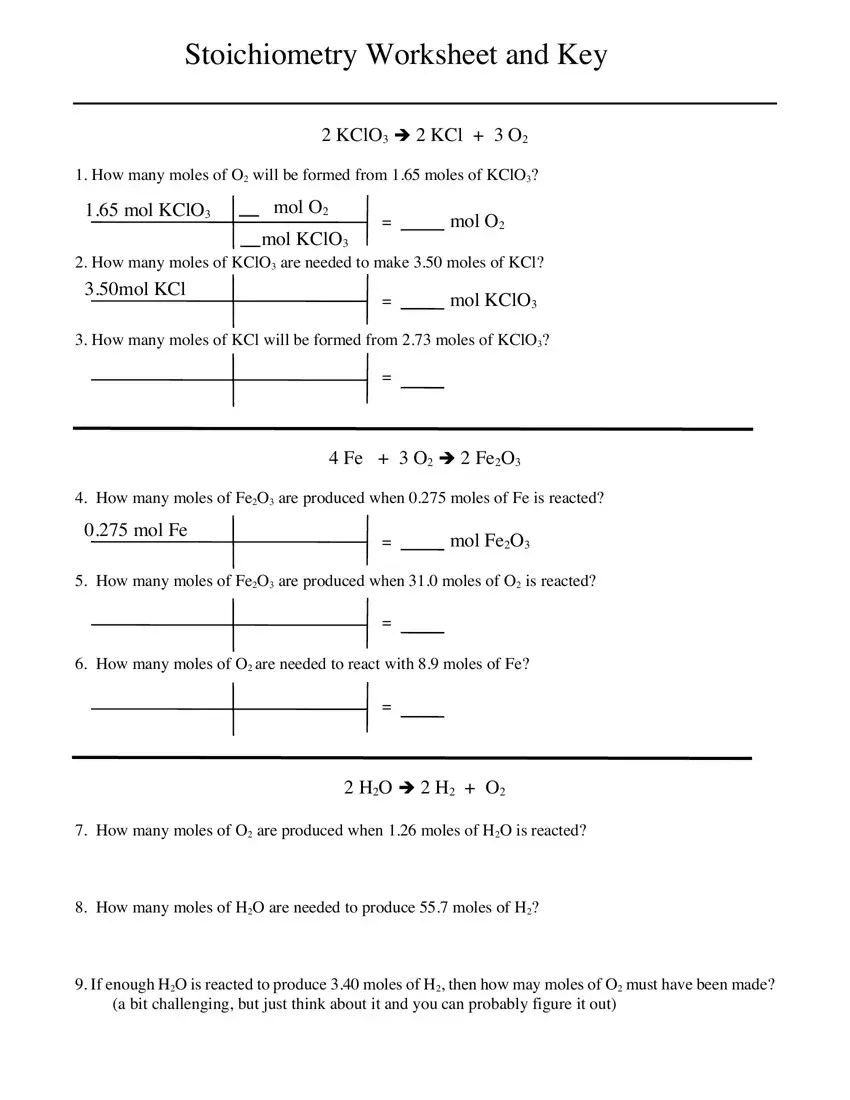
The rules followed in the determination of stoichiometric. Mass of reactants and products number of moles involved molecular and molar masses volume of gases. Explore what is stoichiometry with examples and practice problems. Also, learn how to convert from moles to grams & vice versa. What is stoichiometry & stoichiometric coefficient.
Stoichiometry Practice Worksheet

Stoichiometry helps measure and calculate important quantities, such as: Next, convert the units of measurement. Explore what is stoichiometry with examples and practice problems. These numerical relationships are known as reaction stoichiometry, a term derived from the ancient greek words stoicheion (element) and metron (measure). Stoichiometry is a section of chemistry that involves using relationships between reactants and/or products in a chemical reaction to determine desired quantitative data.
Solved Worksheet 4 Stoichiometry Stoichiometry problems
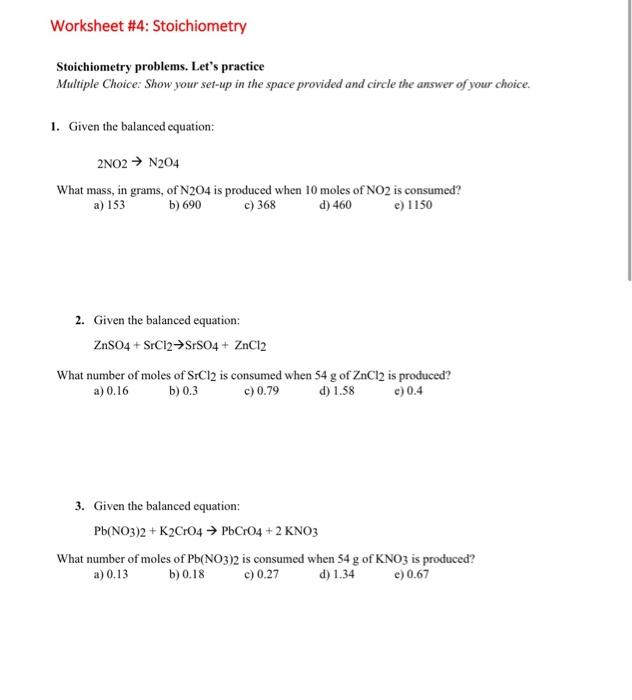
Stoichiometry helps measure and calculate important quantities, such as: The rules followed in the determination of stoichiometric. Stoichiometry is a section of chemistry that involves using relationships between reactants and/or products in a chemical reaction to determine desired quantitative data. Stoichiometry measures these quantitative relationships, and is used to determine the amount of products and reactants that are produced or needed in a given reaction.
Stoichiometry Practice Worksheet - Explore what is stoichiometry with examples and practice problems. To do stoichiometry, start by balancing the chemical equation so that the number of atoms on each side of the equal sign are exactly the same. The stoichiometry of a balanced chemical equation identifies the maximum amount of product that can be obtained. These numerical relationships are known as reaction stoichiometry, a term derived from the ancient greek words stoicheion (element) and metron (measure). The rules followed in the determination of stoichiometric. Next, convert the units of measurement.
The stoichiometry of a reaction describes the relative amounts of reactants and. The rules followed in the determination of stoichiometric. Next, convert the units of measurement. Explore what is stoichiometry with examples and practice problems. Stoichiometry is a section of chemistry that involves using relationships between reactants and/or products in a chemical reaction to determine desired quantitative data.
Next, Convert The Units Of Measurement
What is stoichiometry & stoichiometric coefficient. The rules followed in the determination of stoichiometric. Stoichiometry is a section of chemistry that involves using relationships between reactants and/or products in a chemical reaction to determine desired quantitative data. Stoichiometry helps measure and calculate important quantities, such as:
Stoichiometry Measures These Quantitative Relationships, And Is Used
These numerical relationships are known as reaction stoichiometry, a term derived from the ancient greek words stoicheion (element) and metron (measure). Stoichiometry, in chemistry, the determination of the proportions in which elements or compounds react with one another. Also, learn how to convert from moles to grams & vice versa. The stoichiometry of a balanced chemical equation identifies the maximum amount of product that can be obtained.
In This Article, We'll Look At How We Can
Mass of reactants and products number of moles involved molecular and molar masses volume of gases. Master stoichiometry basics and solve chemical equations effectively. Explore what is stoichiometry with examples and practice problems. To do stoichiometry, start by balancing the chemical equation so that the number of atoms on each side of the equal sign are exactly the same.