
I Statements Worksheet
I Statements Worksheet - “i” statements are a simple way of speaking that will help you avoid this trap by reducing feelings of blame. You're also understanding yourself better. Examples and fun worksheets to help your family develop an assertive communication style and improve conflict resolution Using i statements helps you express your feelings clearly and respectfully, minimizing defensiveness, conflict, and avoiding blaming. A good “i” statement takes responsibility for one’s own feelings, while tactfully describing a. I” statements express feelings and needs without blaming others.
Using i statements helps you express your feelings clearly and respectfully, minimizing defensiveness, conflict, and avoiding blaming. They help communicate difficult emotions constructively while reducing defensiveness in the listener. You're also understanding yourself better. Examples and fun worksheets to help your family develop an assertive communication style and improve conflict resolution Using an “i” message (also known as an “assertiveness statement”) can help you state your concerns, feelings, and needs in a manner that is easier for the listener to hear and understand
I Statement Worksheets Biglearners Worksheet Biglearners

By identifying and expressing your emotions, you're not just communicating. Express your feelings assertively without triggering defensiveness. I” statements express feelings and needs without blaming others. This worksheet guides you through forming effective i statements. Using i statements helps you express your feelings clearly and respectfully, minimizing defensiveness, conflict, and avoiding blaming.
"I" Statements (Worksheet) Therapist Aid

I” statements express feelings and needs without blaming others. A good “i” statement takes responsibility for one’s own feelings, while tactfully describing a. This worksheet guides you through forming effective i statements. By identifying and expressing your emotions, you're not just communicating. They help communicate difficult emotions constructively while reducing defensiveness in the listener.
Printable I Statements Worksheet

They help communicate difficult emotions constructively while reducing defensiveness in the listener. Examples and fun worksheets to help your family develop an assertive communication style and improve conflict resolution A good “i” statement takes responsibility for one’s own feelings, while tactfully describing a. Learning how to use “i statements” is like unlocking a secret code to better communication. Using i statements helps you express your feelings clearly and respectfully, minimizing defensiveness, conflict, and avoiding blaming.
I Statements Worksheets 15 Worksheets Library Worksheets Library
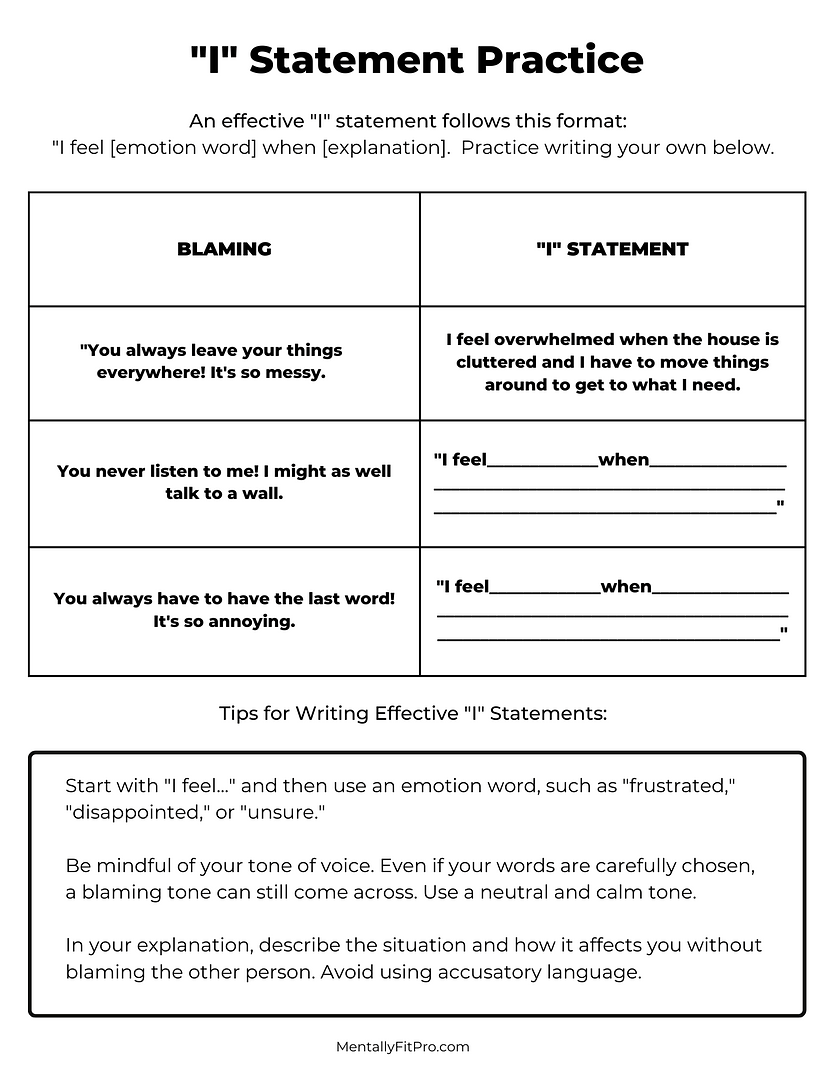
Using an “i” message (also known as an “assertiveness statement”) can help you state your concerns, feelings, and needs in a manner that is easier for the listener to hear and understand A good “i” statement takes responsibility for one’s own feelings, while tactfully describing a. Learning how to use “i statements” is like unlocking a secret code to better communication.
I feel statements worksheets Artofit

Using i statements helps you express your feelings clearly and respectfully, minimizing defensiveness, conflict, and avoiding blaming. Instead of pointing fingers or placing blame, these worksheets show kids how to take ownership of their feelings. They help communicate difficult emotions constructively while reducing defensiveness in the listener. “i” statements are a simple way of speaking that will help you avoid this trap by reducing feelings of blame.
I Statements Worksheet - “i” statements are a simple way of speaking that will help you avoid this trap by reducing feelings of blame. This worksheet guides you through forming effective i statements. A good “i” statement takes responsibility for one’s own feelings, while tactfully describing a. They help communicate difficult emotions constructively while reducing defensiveness in the listener. By identifying and expressing your emotions, you're not just communicating. Instead of pointing fingers or placing blame, these worksheets show kids how to take ownership of their feelings.
I” statements express feelings and needs without blaming others. Instead of pointing fingers or placing blame, these worksheets show kids how to take ownership of their feelings. Express your feelings assertively without triggering defensiveness. “i” statements are a simple way of speaking that will help you avoid this trap by reducing feelings of blame. Learning how to use “i statements” is like unlocking a secret code to better communication.
A Good “I” Statement Takes Responsibility For One’s Own
Using i statements helps you express your feelings clearly and respectfully, minimizing defensiveness, conflict, and avoiding blaming. Learning how to use “i statements” is like unlocking a secret code to better communication. You're also understanding yourself better. They help communicate difficult emotions constructively while reducing defensiveness in the listener.
“I” Statements Are A Simple Way Of Speaking
Instead of pointing fingers or placing blame, these worksheets show kids how to take ownership of their feelings. I” statements express feelings and needs without blaming others. By identifying and expressing your emotions, you're not just communicating. Express your feelings assertively without triggering defensiveness.
Examples And Fun Worksheets To Help Your Family Develop
This worksheet guides you through forming effective i statements. Using an “i” message (also known as an “assertiveness statement”) can help you state your concerns, feelings, and needs in a manner that is easier for the listener to hear and understand