
Consideration Clause In Insurance
Consideration Clause In Insurance - The insured or policyholder, the insurer or insurance company, the insured object or. Consideration is the value that both parties to a contract exchange as part of their agreement. It attaches value to the. It forms the foundation for the. Consideration clauses explicitly articulate the exchange of value between parties in a contract. Consideration in an insurance contract comprises the monetary premiums paid by the insured and the insurer’s promise to compensate for future covered losses.
It attaches value to the. In an insurance contract, consideration is given by the applicant in exchange for the insurer’s. It is defined as the amount of money or value that each party agrees to exchange for the insurance coverage. Other industries can also use. What is the consideration clause?
Solved The Consideration clause of an insurance contract
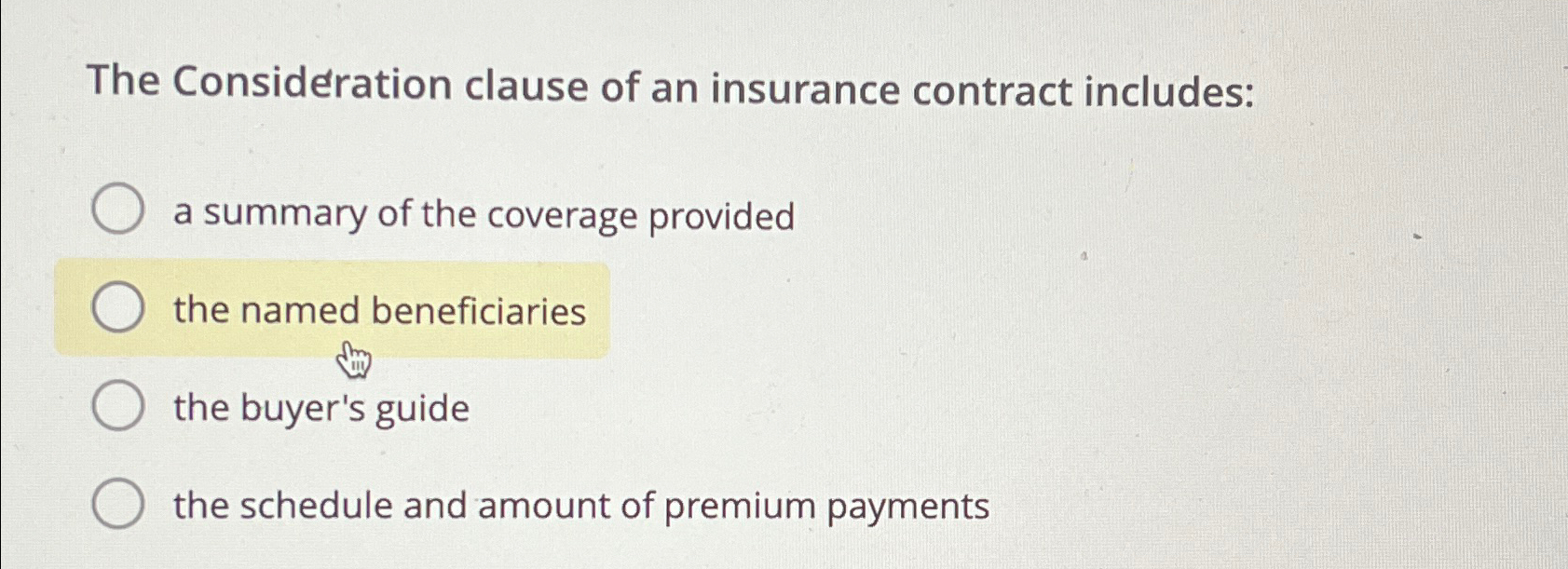
From what constitutes consideration to the role of proximate cause in claims, these concepts are fundamental for both policyholders and insurance professionals. Consideration plays a central role in the insurance contract, involving four key entities: These clauses serve to solidify the legality and enforceability of the agreement. Consideration is the value that both parties to a contract exchange as part of their agreement.
The Consideration Clause Of An Insurance Contract Includes Force

Consideration plays a central role in the insurance contract, involving four key entities: It is defined as the amount of money or value that each party agrees to exchange for the insurance coverage. What is the consideration in the case of life insurance by the insurance company? From what constitutes consideration to the role of proximate cause in claims, these concepts are fundamental for both policyholders and insurance professionals.
What Is Consideration Explain The Rules Regarding Consideration With

Consideration is the value that both parties to a contract exchange as part of their agreement. In an insurance contract, consideration is given by the applicant in exchange for the insurer’s. Consideration clause is the most important clause used in insurance policy contracts and it defines the amount which is due for coverage and when to pay the. Consideration can be defined as the value given in exchange for the promises sought.
The Consideration Clause Of An Insurance Contract Includes Force

Consideration can be defined as the value given in exchange for the promises sought. A consideration clause is a provision most commonly used in insurance policies that provides information on how much the coverage costs and when to pay. Consideration in an insurance contract comprises the monetary premiums paid by the insured and the insurer’s promise to compensate for future covered losses.
Consideration Clause An Authentic 360° View of Legal Tradeoffs

Consideration clauses explicitly articulate the exchange of value between parties in a contract. Consideration can be defined as the value given in exchange for the promises sought. Consideration is a critical component of any insurance policy. What is the consideration in the case of life insurance by the insurance company? What is the consideration clause?
Consideration Clause In Insurance - Consideration clauses explicitly articulate the exchange of value between parties in a contract. Consideration can be defined as the value given in exchange for the promises sought. In an insurance contract, consideration is given by the applicant in exchange for the insurer’s. The consideration clause in a life insurance policy specifies the policy owner’s obligation to pay premiums in exchange for the insurer’s promise to provide. Insurance contracts rely on a fundamental principle called “consideration,” which ensures both parties—insurer and policyholder—exchange something of value. The insured or policyholder, the insurer or insurance company, the insured object or.
Consideration clause is the most important clause used in insurance policy contracts and it defines the amount which is due for coverage and when to pay the. Consideration in an insurance contract comprises the monetary premiums paid by the insured and the insurer’s promise to compensate for future covered losses. The consideration clause in a life insurance policy specifies the policy owner’s obligation to pay premiums in exchange for the insurer’s promise to provide. What is the consideration in the case of life insurance by the insurance company? It forms the foundation for the.
Consideration Clauses Explicitly Articulate The Exchange Of Value Between
Consideration is a critical component of any insurance policy. If you enter into a contract with another party, you agree to give and get something in return. In an insurance contract, consideration is given by the applicant in exchange for the insurer’s. The consideration clause in a life insurance policy specifies the policy owner’s obligation to pay premiums in exchange for the insurer’s promise to provide.
Consideration Can Be Defined As The Value Given
These clauses serve to solidify the legality and enforceability of the agreement. Negotiating indemnification clauses requires careful consideration of the specific risks associated with a contractual relationship, as these provisions can significantly impact liability exposure. In the world of life insurance, the consideration clause plays a crucial role. Consideration clause is the most important clause used in insurance policy contracts and it defines the amount which is due for coverage and when to pay the.
It Forms The Foundation For The
What is the consideration clause? Consideration is a term used in contract law to describe the value or benefit that one party receives in exchange for the promises or obligations made by another party. Consideration in an insurance contract comprises the monetary premiums paid by the insured and the insurer’s promise to compensate for future covered losses. Other industries can also use.
Insurance Contracts Rely On A Fundamental Principle Called “Consideration,”
A consideration clause is a provision most commonly used in insurance policies that provides information on how much the coverage costs and when to pay. It is defined as the amount of money or value that each party agrees to exchange for the insurance coverage. What is the consideration in the case of life insurance by the insurance company? From what constitutes consideration to the role of proximate cause in claims, these concepts are fundamental for both policyholders and insurance professionals.